


The tournament is here — and so are the midnight kick-offs
The 2026 FIFA World Cup is finally upon us. After years of anticipation, the world’s biggest football tournament kicked off on June 11, 2026, spreading its 104 matches across 16 stadiums in the United States, Canada, and Mexico. For fans in Europe, it means a few bleary-eyed mornings. For fans in Uganda — and all of East Africa — it means something far more dramatic: an entire month of ransomed sleep.
Welcome to 2026 World Cup season in Kampala. The kafundas are fully stocked, the big screens are up, and the alarm clocks have been thrown in the bin.
The Time Zone Problem Nobody Warned You About
Here is the brutal arithmetic. Uganda runs on East Africa Time (EAT), which sits at UTC+3. The World Cup hosts — the United States, Canada, and Mexico — are between seven and ten hours behind that. When a match kicks off at 3:00 PM in Dallas, it is already 10:00 PM in Kampala. When one starts at midnight in New York, it is 7:00 AM in Nairobi — but plenty of matches don’t start that early.
The opening match, Mexico versus South Africa at the iconic Estadio Azteca, kicked off at 10:00 PM EAT on June 11. A reasonably civilised hour, admittedly. But that is where the generosity ends. With 13 different kick-off slots spread across a continent, games are scattered from early evening all the way to the small hours of the morning for East African viewers.
Of the 104 matches in the tournament, a staggering 52 fall in the early morning window of midnight to 6:00 AM EAT. That means roughly half of the entire World Cup is being played while most of Uganda ought to be asleep. The other 45 matches land in the evening window between 6:00 PM and midnight — manageable, if not always comfortable. Only a handful fall in genuinely prime-time slots.
The World Cup Final on July 19 — also at 10:00 PM EAT — will at least bring the tournament to a decent close. But the road to get there will cost Uganda several hundred thousand hours of collective sleep.
This Is Not Uganda’s First Late-Night Rodeo
To be fair, Ugandans have been here before. The passion for football in this country is not a new development, and neither is the willingness to suffer for it. In 2006, when Kampala was still plagued by rolling blackouts, hundreds of fans gathered in the streets around downtown, staring up at a giant advertising screen on an insurance building just to watch England versus Portugal in extra time. Generators hummed in the background. People who could not get a view of a screen found a radio. Nobody stayed home.
Football here is, as one Kampala observer put it, “practically a second religion.” On any given matchday during the English Premier League season, the city’s sports bars — Bubbles O’Leary’s in Kololo, Legends Bar, kafundas from Ntinda to Nateete — are packed with believers. The screens are big, the beer is cold, and the atmosphere has no equivalent.
The World Cup simply turns the volume all the way up.

Kampala at 2 AM: The City Has Plans
One thing working in Uganda’s favour is that Kampala, as a city, does not really believe in sleep anyway. Clubs open at 10:00 PM. Things get serious after midnight. Most establishments run until 5:00 or 6:00 AM, and nobody raises an eyebrow. The city that never sleeps was already perfectly calibrated for a tournament being played in the Americas.
Already, conversations in Kampala have turned to the question of where people will watch. The kafundas are the obvious answer — those neighbourhood bars where plastic chairs fill the courtyard, the generator is already running, and a plate of rolex (Uganda’s beloved street food, a chapati rolled with eggs and vegetables) costs almost nothing. For the late-night games, they will become living rooms for hundreds of thousands of people who don’t want to watch alone.
The bigger sports bars and rooftop venues will handle the premium crowd: those who want a proper screen, a proper drink, and a proper atmosphere for the 1:00 AM and 3:00 AM kick-offs. Ugandan police have already confirmed they are preparing for this, with the Kampala Metropolitan authorities flagging security arrangements specifically around the “awkward hours at which some games will be played.”
The African Stakes Make It Personal at 2026 World Cup
For many Ugandans — whose national team, the Cranes, did not qualify — the emotional investment in 2026 is channelled through the continent’s representatives. And what a group they are. This year, Africa has its largest-ever representation at a World Cup, with nine nations qualifying: Morocco, Senegal, Egypt, South Africa, DR Congo, Ivory Coast, Cape Verde, Algeria, and Ghana.
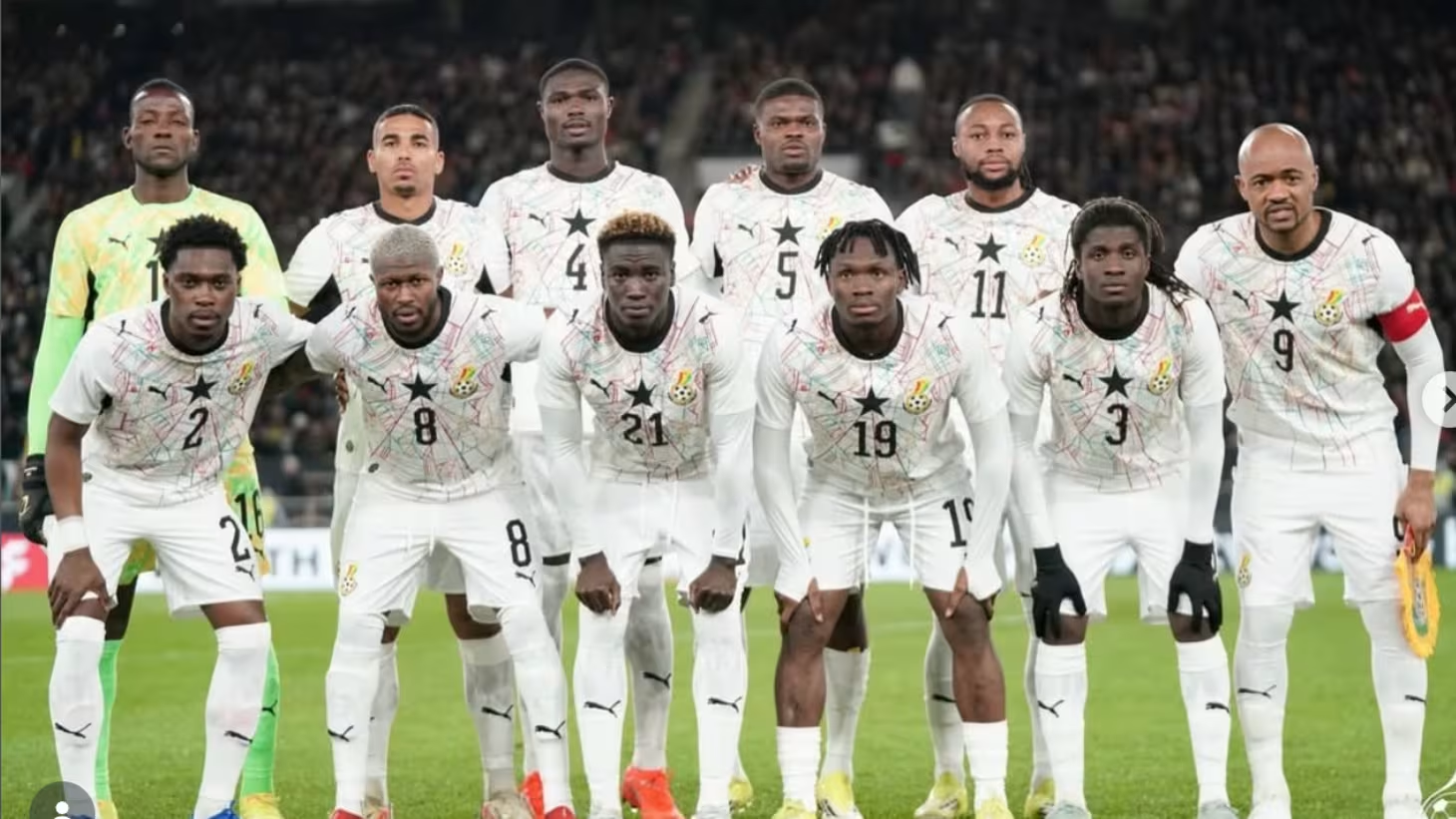
Nine African nations. Nine sets of fixtures to track, nine reasons to set the alarm. When Morocco play — and Morocco, the side that reached the semi-finals in Qatar 2022, are genuine contenders again — Kampala will be watching. When Ghana play, the Ghanaian community and every neutral African fan in the city will be watching. When South Africa play, having opened the very first match of the tournament, East Africa was already paying attention.
There is also the matter of individual allegiance. Ugandan football fans are deeply loyal to European clubs and, by extension, to the players who represent those clubs on the international stage. Watching a World Cup is, for many, the only time in four years those loyalties get fully tested on the grandest stage.
The Morning After
The real comedy of the 2026 World Cup in Uganda will unfold every morning from June 12 onwards, in offices and boda-boda stages and market stalls across the country. The glazed eyes. The mid-sentence yawning. The WhatsApp statuses that say nothing except the scoreline and a single emoji.

Bosses will have to decide how strictly to enforce 8:00 AM starts when half the workforce watched Argentina versus Algeria finish at 4:30 AM. Students will nod off in lecture halls after spending the night at a kafunda with twenty friends. Parents will debate, with themselves and their partners, whether the kids are old enough to stay up for the quarter-finals.
For 39 days, Uganda will run on coffee, chapati, and football.
A Tournament Worth Losing Sleep Over
The 2026 World Cup is the biggest in history: 48 teams, 104 matches, three host nations, and a new expanded format that gives more of the world a seat at the table. For the nine African nations involved, it is a moment of continental pride. For their fans across the continent — including the millions in Uganda who live and breathe the game — it is a once-in-four-years pilgrimage that no time zone can truly stop.
Yes, the kick-off times are brutal. Yes, there will be casualties — productivity, punctuality, and at least a few relationships strained by one too many 3:00 AM “just one more game” moments. But ask any Ugandan football fan right now whether they would rather sleep.
They will look at you like you just asked them to pick between breathing and football.
The kafundas are open. The screens are on. East Africa, set your alarms.
From Uganda Car Rental Services: Enjoy Every Moment of the World Cup!
To every football fan across Uganda — from Kampala to Gulu, Mbarara to Mbale — Uganda Car Rental Services wishes you an incredible World Cup 2026! Whether you’re driving across town to catch the big game at your favourite kafunda, heading to a friend’s viewing party, or making a night of it at a sports bar, we’ve got you covered on the road.
This World Cup season, don’t let transport worries keep you from the action. Book a reliable, comfortable ride with us and focus on what matters — the football. Safe travels, late nights, and may your favourite team go all the way.


Related Articles
4×4 Africa: The Complete Guide For First-time Travelers
Self Drive vs Car Hire with a Driver in Uganda
Arriving at Entebbe Airport at Night: Uganda Safari Guide